Children notice broken things long before we are ready to explain them. Broken toys. Broken promises. Broken pets. Broken families on television and in their own neighborhoods. By the time they start kindergarten, most children have a working theory that the world breaks sometimes, and that not all broken things get fixed.
Christian parenting is partly the work of standing in the middle of that reality with them while helping them learn the kind of hope the Bible actually teaches. Not the kind that pretends nothing is wrong. The kind that knows things break and still trusts that God restores.
That is harder to teach than it sounds. Here is how to start.
Why Hope Is Hard to Teach
Hope is an abstract idea, and young children think in concrete terms. When a four-year-old asks why the goldfish died, “we have hope” is not an answer. They need a story, a face, a hand to hold, a verse they can repeat.
Many of us also reach for the wrong kind of hope when our kids are hurting. We say “everything will be fine” or “don’t be sad.” Children are usually smart enough to know that everything is not always fine. And being told not to feel what they feel teaches them to hide their hearts from us, not to bring those hearts to God.
Biblical hope is honest. It admits that the world is broken. It admits that we grieve. And it points, gently and persistently, to a God who is making all things new.
What the Bible Actually Says About Hope (in Kid-Friendly Words)
Hope shows up in the Bible more than 150 times. A few verses are especially helpful for talking with young children.
Lamentations 3:22-23 says, “Because of the Lord’s great love we are not consumed, for his compassions never fail. They are new every morning; great is your faithfulness.” This is one of the most accessible verses for a child. Every morning, God’s mercy is new again. Whatever yesterday was, today gets fresh love.
Romans 15:13 says, “May the God of hope fill you with all joy and peace as you trust in him, so that you may overflow with hope by the power of the Holy Spirit.” This verse links hope to trust. We hope because we trust the One who holds tomorrow.
Jeremiah 29:11 is often quoted, but worth quoting again with kids: “For I know the plans I have for you, declares the Lord, plans to prosper you and not to harm you, plans to give you hope and a future.” Hope is something God gives, not something we have to manufacture on our own.
Psalm 39:7 is short enough to memorize: “But now, Lord, what do I look for? My hope is in you.” A four-year-old can learn that.
Read these verses with your child. Read them when nothing is wrong, so they have them ready when something does go wrong. Read them slowly. Tell them what the words mean in your own family’s language.
Five Ways to Show Your Child Hope This Week
Telling a child to be hopeful is not the same as showing them what hope looks like. Here are five small practices to build hope into your week.
1. Talk about broken things AND restoration. When a toy breaks, do not just throw it away. Try to glue it. Talk about how some things can be mended and some cannot, and that God is in the business of mending. When a hard day ends, talk about it before bed. “That was hard. Tomorrow is new. God’s mercies are new every morning.”
2. Read stories about people who waited. Joseph waited years in prison before God’s promise came true. Hannah prayed for a child for a long time. The disciples waited in an upper room. Find Bible stories or children’s storybooks that linger on the waiting parts, not just the endings.
3. Practice gratitude as the soil hope grows in. At dinner or bedtime, ask your child two questions: “What was a hard moment today?” and “What was a good moment today?” Naming both is more honest than only the good. Over time, children learn that good moments arrive even on hard days, and that pattern is what hope feels like.
4. Pray with them when they are disappointed. Do not skip past their disappointment to a quick “it’ll be okay.” Pray it out loud. “God, this is hard. We are sad. We trust you. Help us see what you are doing.” Children who hear honest prayer learn that they can bring real feelings to a real God.
5. Tell them your own stories of restoration. A friendship that healed. A job that came after a long stretch of waiting. A prayer answered after years. Children remember what their parents lived more than what their parents said. When you share a story where God showed up, you are giving them a memory they can borrow when their own waiting comes.
When You Don’t Feel Hopeful Yourself
Christian parents are sometimes told that we have to model unshakable faith, like our kids will be ruined if they ever see us struggle. The Bible disagrees. Half the psalms are written by people who are devastated. Habakkuk is a whole book of a prophet wrestling with God in honest grief. Jesus Himself wept at Lazarus’s grave even though He knew the ending.
If you are in a season where hope feels far away, your child does not need you to fake it. They need you to model what honest faith looks like. Tell them, in age-appropriate words, “I’m sad, too. Let’s pray together.” Read the psalms with them, the messy ones.
A child who watches a parent bring real sorrow to a real God learns something more valuable than a hundred Sunday school lessons. They learn that God is big enough for their sad days, too.
A Story That Makes Hope Real
Children need stories the way they need oxygen. A single story can teach what a hundred lectures cannot.
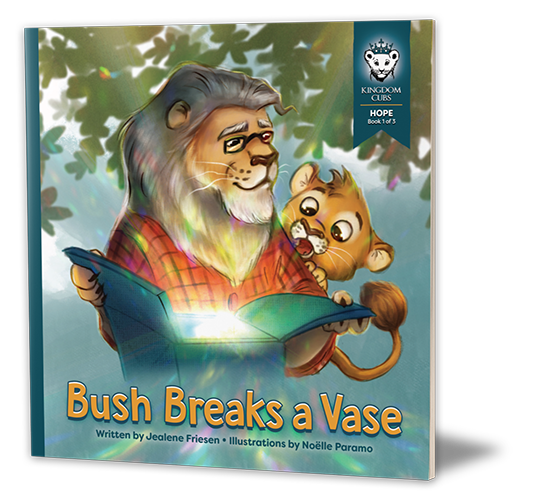
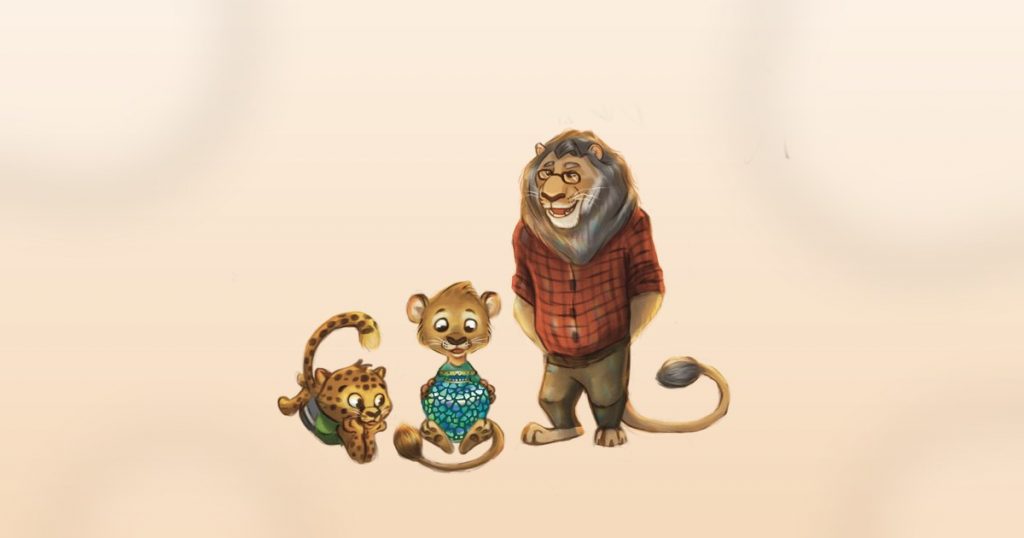
This is part of why the Kingdom Cubs series exists. Bush Breaks a Vase, the first book in the Hope mini-series, is the story of a young lion cub who breaks his mother’s favorite vase. Bush is very sorry, and he is heartbroken. Grandpa King takes the shattered pieces and creates something more beautiful than the original vase ever was.
It is a story about brokenness. It is a story about restoration. And for a child who has just broken their own version of a vase, whether literal or relational, it is a story that makes biblical hope feel possible.
If hope is a theme your family is sitting in this season, be on the lookout for more stories coming soon in the Kingdom Cubs Hope series, or browse the full Kingdom Cubs collection to choose a virtue your child is working through right now.
Common Questions Christian Parents Ask About Hope
What is the difference between hope and wishful thinking?
Wishful thinking is wanting something to be true. Biblical hope is trusting that God is who He says He is, regardless of what happens. Wishful thinking depends on circumstances. Hope depends on God. For a child, the simplest version is this: hope is not the same as a wish. Hope is the choice to trust God when things are hard.
At what age should I start teaching my child about hope?
As early as you can put words to it. A two-year-old will not understand a theology of suffering, but they will understand “It’s sad that it broke, but God is going to make it new someday.” Repeat that often, in age-appropriate words, and you are already teaching hope.
How do I talk to my child when something genuinely cannot be fixed?
Honestly. Some broken things in this life will not be made right until heaven, and pretending otherwise will hurt your child more in the long run. Tell them the truth. Tell them you are sad, too. Tell them you trust God to make it right someday, even if that someday is not in this life. The book of Revelation ends with God wiping every tear away. That is the hope we are pointing toward.
What if my child stops believing God hears their prayers because their prayers were not answered the way they wanted?
This is one of the most important conversations you will have with them. The answer is not “you didn’t pray hard enough” or “God always says yes if you have enough faith.” The answer is closer to what Jesus prayed in Gethsemane: “not my will, but yours.” God hears every prayer. He answers every prayer. Sometimes the answer is “yes,” sometimes it is “no,” sometimes it is “wait.” All three are answers from a God who loves them.
A Final Thought
Hope is not the absence of broken things. Hope is the trust that God is still here, still working, still making things new even when we cannot see it.
Teach your child to look at the broken pieces honestly. Then teach them to look up. That is where hope lives.