We are raising children in the most impatient era in human history. Streaming starts the moment they tap a button. Toys arrive the next afternoon. Photos appear before the moment is even over. The world they are growing up in is engineered, very carefully, to make waiting feel unnecessary.
The Bible has a different vision for our hearts. It calls patience a fruit of the Spirit, something the Holy Spirit grows in us over time. It treats waiting as a spiritual discipline, not an inconvenience. It assumes that maturity, in part, looks like a person who can wait without falling apart.
Teaching that to a five-year-old in 2026 is not easy. But it is possible, and it matters more than most parenting tasks. Here is how to start.
Why Patience Feels Impossible Right Now
Patience is hard for adults, much less children. Children have less impulse control by design. Their prefrontal cortex, the part of the brain that does delayed gratification, is years away from being fully developed. When a four-year-old yells “I want it NOW,” that is not always purely disobedience. Sometimes biology has a part to play, too.
But on top of biology, we have built a world that punishes waiting at every turn. Long checkout lines. Slow Wi-Fi. Buffering videos. Even adults react with frustration to a five-second pause. Our children are watching us, and they are learning what we model.
This is the first thing to know: teaching patience is not about scolding your child for impatience. It is about giving them tools, language, and stories to handle the universal human experience of waiting.
What the Bible Actually Says About Waiting
Patience shows up across the Bible, and not just as “wait politely.” Scripture treats waiting as one of the most spiritually rich seasons a human can live through.
Galatians 5:22-23 lists patience as fruit of the Spirit, alongside love, joy, peace, kindness, goodness, faithfulness, gentleness, and self-control. This is important. Patience is not something you have to manufacture. It is something the Holy Spirit grows in you. That is good news for parents and for children.
Psalm 27:14 says, “Wait for the Lord; be strong and take heart and wait for the Lord.” Notice the verse repeats itself. Waiting takes strength. Waiting takes courage. The psalmist understood that waiting is one of the harder things a person does.
Romans 8:25 says, “But if we hope for what we do not yet have, we wait for it patiently.” This verse links patience to hope. We can wait when we believe something good is coming.
Lamentations 3:25 says, “The Lord is good to those whose hope is in him, to the one who seeks him.” Goodness comes to those who keep seeking.
James 5:7-8 uses the picture of a farmer waiting for the harvest. “See how the farmer waits for the land to yield its valuable crop, patiently waiting for the autumn and spring rains. You too, be patient and stand firm.” For a child, the farmer image is concrete and useful.
Habakkuk 2:3 says, “Though it linger, wait for it; it will certainly come and will not delay.” This verse is for the moments when waiting feels endless.
Read these verses with your child. Pick one for the season your family is in. Patience is not a one-time lesson. It is a soil that needs watering for years.
Five Kid-Sized Ways to Practice Patience This Week
You cannot lecture a child into patience. You build it through small, repeated practices.
1. Plant something together. A tomato seed. A sunflower. A bean in a paper cup. The act of planting and watering and watching nothing happen for weeks is the most concrete patience lesson there is. When the first leaf appears, talk about it. “Remember when we planted this? We waited for weeks. God made it grow.”
2. Cook something slow together. Bread that has to rise. A roast that takes hours. Cookies that need to chill before baking. Fast food teaches one lesson. Slow food teaches another.
3. Build “wait time” into the day. Five minutes of quiet before opening a present. A walk before dessert. A song between asking for something and getting it. These small practices stretch the child’s wait muscle without overwhelming them.
4. Narrate your own waiting. Out loud. “This is a long line, and I’m feeling impatient. Let’s count three things we are thankful for while we wait.” Children learn to handle waiting by watching us handle waiting.
5. Pray a “waiting prayer” together. When your child wants something they cannot have right now, pray it out loud. “God, we want this. We are choosing to trust you with the timing. Help us wait well.” Children who learn to bring their wanting to God grow up with a different relationship to wanting.
The Joy of Waiting (a Counterintuitive Idea)
Most teaching about patience focuses on the discipline of waiting. The Bible adds a layer most of us miss: waiting can actually be joyful.
When a child waits for Christmas morning, the waiting itself is part of the joy. The anticipation, the counting down, the slow building of expectation. We do not love Christmas only because of the morning. We love it partly because we waited for it.
This is the secret hidden inside most biblical waiting. The waiting is doing something inside us. It is teaching us trust. It is teaching us that the gift, when it comes, will be sweeter because we hoped for it.
Help your child notice the joy in waiting. The first warm day after a long winter. The slow opening of a flower. The growing excitement of a birthday week. Patience is not endurance through misery. Patience is choosing to be present in the in-between.
When You Are Not Patient Either
You will not always be a patient parent. None of us are. And one of the most powerful things you can do for your child is let them watch you handle your own impatience well.
When you are short with them, apologize. “I’m sorry I snapped. I’m tired, and I was impatient. Let’s pray together.” This teaches your child that being impatient calls for honesty and repair.
When you are stuck in traffic, in a long line, in a slow season of life, narrate your waiting to your child. Not perfectly. Honestly. “This is hard. I am asking God to give me patience. Want to pray with me?”
A child who watches a parent fail at patience and then bring that failure to God will learn a valuable lesson. We do not get patient by trying harder. We get patient by slowly being grown by the Holy Spirit in the soil of our own honesty.
A Story That Makes Patience Make Sense
Children do not learn abstract concepts. They learn stories.
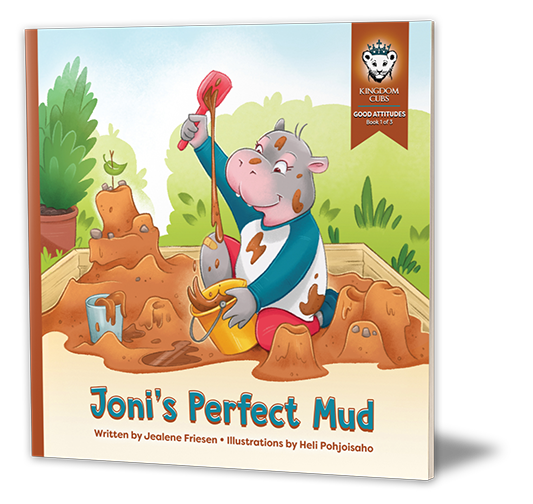
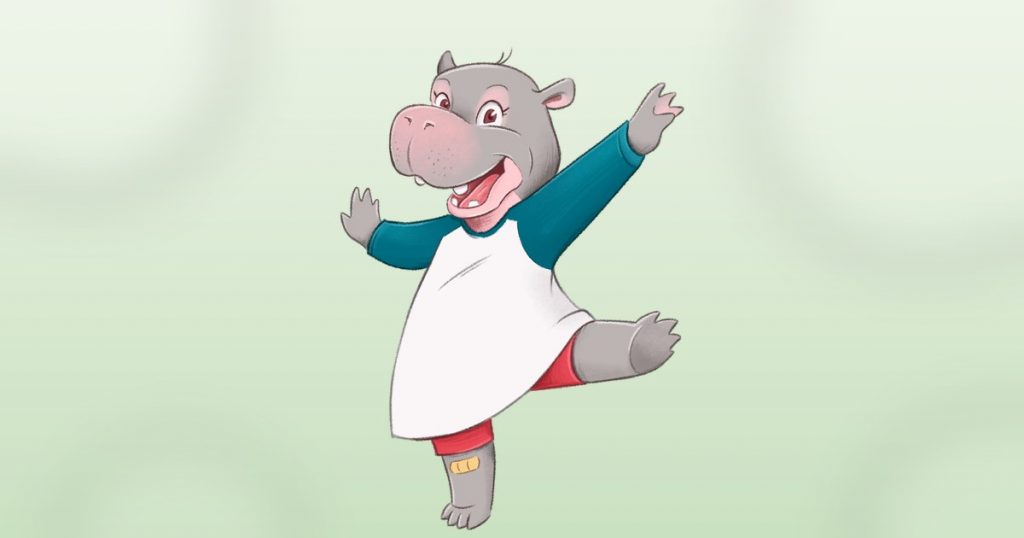
Joni’s Perfect Mud is the first book in the Kingdom Cubs Good Attitudes mini-series. Joni is a young hippo who loves nothing more than playing in mud. But a long storm has kept her stuck inside, and she is desperate for the rain to stop. When it finally does, Joni discovers that the rain she did not want is what made the perfect mud she always wanted.
It is a small story with a big lesson. Sometimes the rain is not the obstacle to the joy. Sometimes the rain is the joy, and we just cannot see it yet.
For more stories built around cultivating good attitudes like patience in your child, the Kingdom Cubs Good Attitudes series is here. You can also browse all Kingdom Cubs books and pick the virtue your family is sitting in this season.
A Final Thought
A patient child does not happen by accident. It is grown, the way a garden is grown. With small, repeated practices. With Bible verses spoken often. With stories told and retold. With a parent who lives, imperfectly, the patience they want to teach.
You will not have a perfectly patient child. None of us do. But you can have a child who knows how to wait, how to bring their wanting to God, and how to find joy in the in-between. That is one of the most useful gifts you can give them for the world they are about to walk into.